
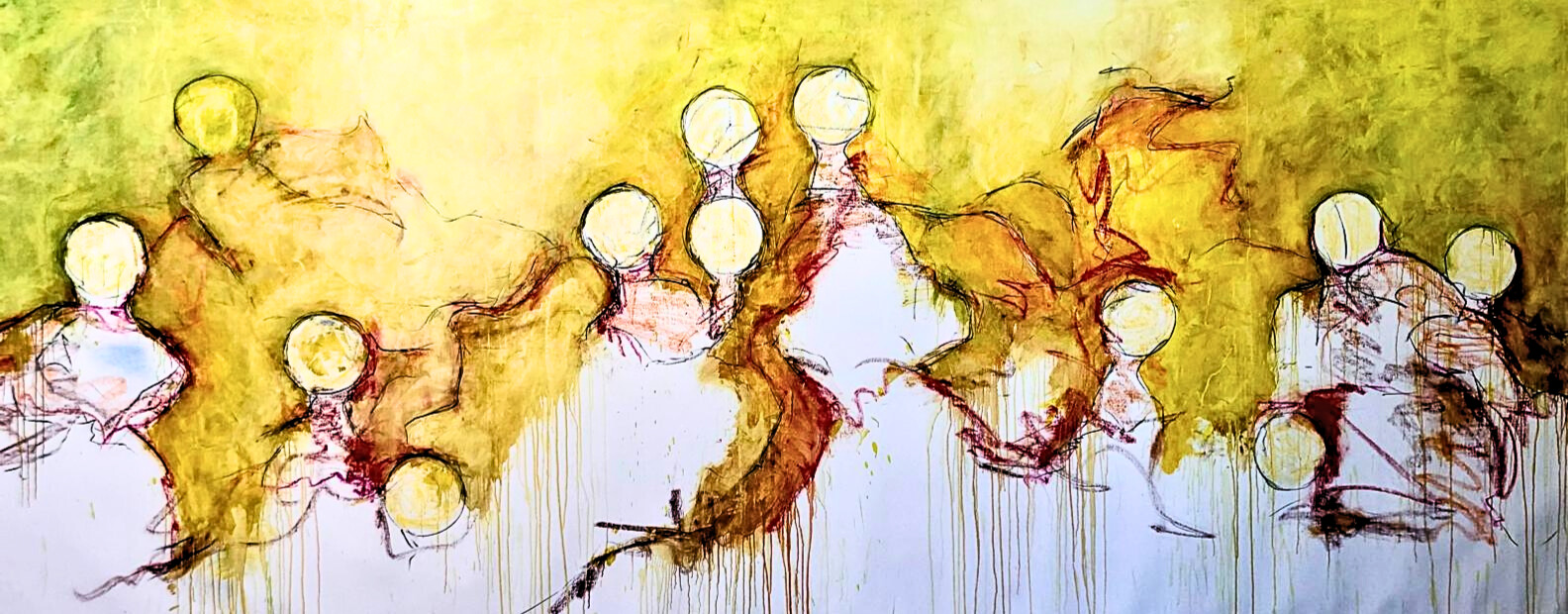
Through the Fire
420 × 160 cm
Oil, charcoal, and chalk on canvas
Collection: Ospedale Cristo Re, Rome, Italy
A striking work from Adrian Bol’s Through the Fire series, first exhibited at the Museo dell’Ara Pacis in Rome in 2026. The painting presents a group of faceless figures suspended between presence and dissolution, rendered through raw gestures, layered pigments, and flowing traces of paint.
Dominated by light-infused yellows and deep, visceral reds, the work evokes tension, transformation, and a sense of passage beyond the individual.
Bol’s multidisciplinary practice, bridging painting and cinema, is reflected in the composition’s narrative intensity and physicality. The work does not describe a scene but creates an experience—one that resonates on both emotional and spiritual levels.
Following its presentation at the Ara Pacis, the work was donated to the Cristo Re Hospital in Rome, where it is now part of the permanent collection and accessible to the public—reinforcing its significance beyond the exhibition context.
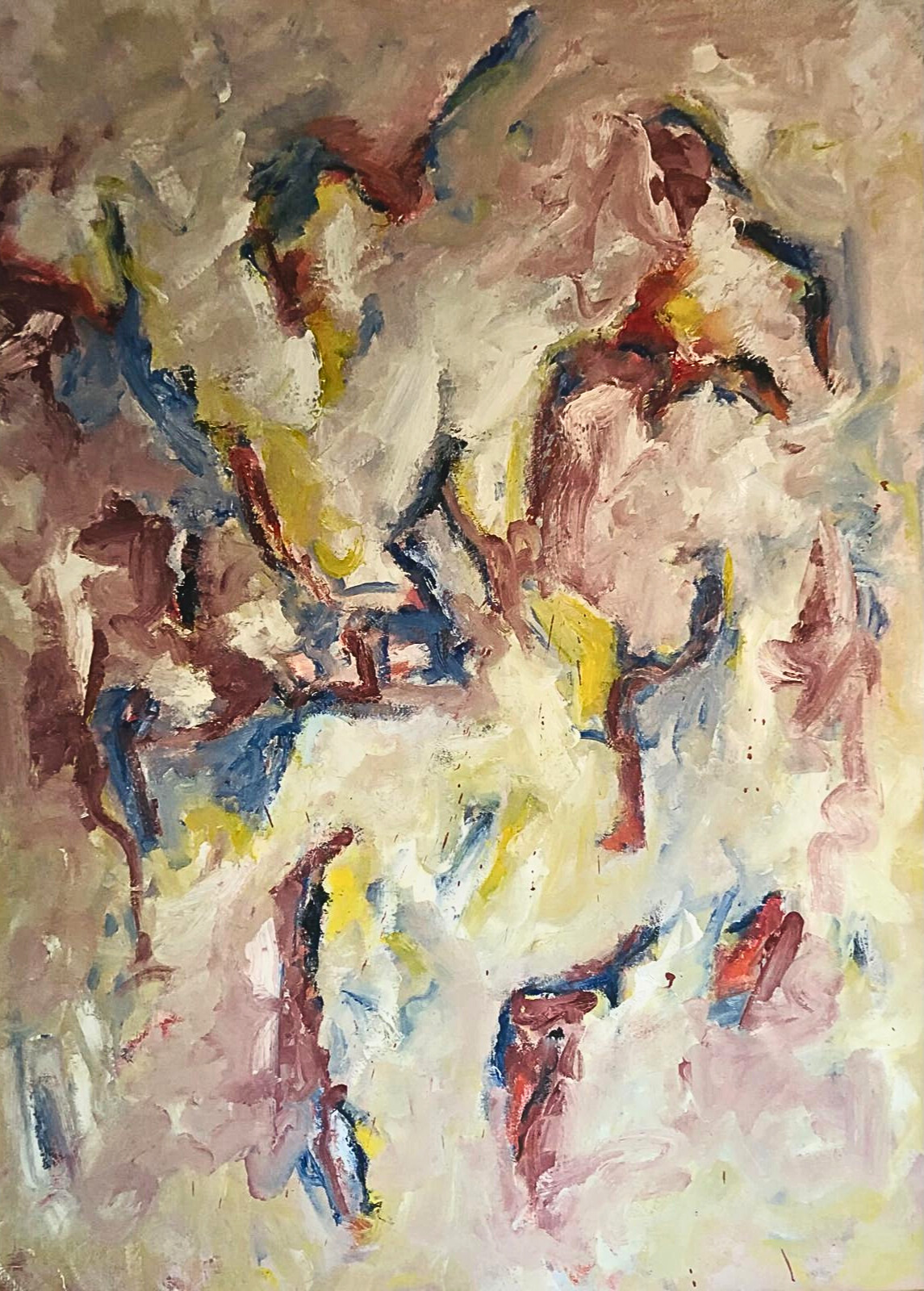
Warrior Horse
165 × 115 cm - Oil on canvas
Private Collection
165 × 115 cm - Oil on canvas
Private Collection
In this painting, Adrian Bol presents not a depiction of a horse, but a site of spiritual conflict. The figure emerges and dissolves at once, as if caught between opposing forces. What unfolds on the canvas is less a physical scene than a moment of spiritual warfare—quiet, internal, and unresolved.
The horse, historically a symbol of power and conquest, is here rendered fragile and strained. Thick, gestural brushstrokes push the form upward and apart, suggesting a struggle that is not merely bodily but metaphysical. The composition feels contested, as though something unseen is pressing through the surface.
Bol’s restrained palette—muted creams and pale flesh tones disrupted by cobalt blues, ochres, and flashes of red—reads as emotional and spiritual residue rather than color choice. The blues and reds feel like opposing energies, clashing and intertwining, while lighter passages hint at moments of grace or surrender. This spiritual journey seeps through the painting rather than announcing itself; it is felt before it is understood.
The surface remains raw and exposed. Bol allows uncertainty to stay visible, reinforcing the sense that this is not a victory scene, but a passage through doubt, resistance, and faith. Strength here is provisional, tested.
The influence of Bol’s cinematic sensibility is evident in the suspended tension of the image. The painting feels like a frozen threshold—caught between fall and ascent, despair and resolve.
Rather than offering resolution, the work invites contemplation. It asks the viewer not to observe the struggle from a distance, but to recognize it within themselves.
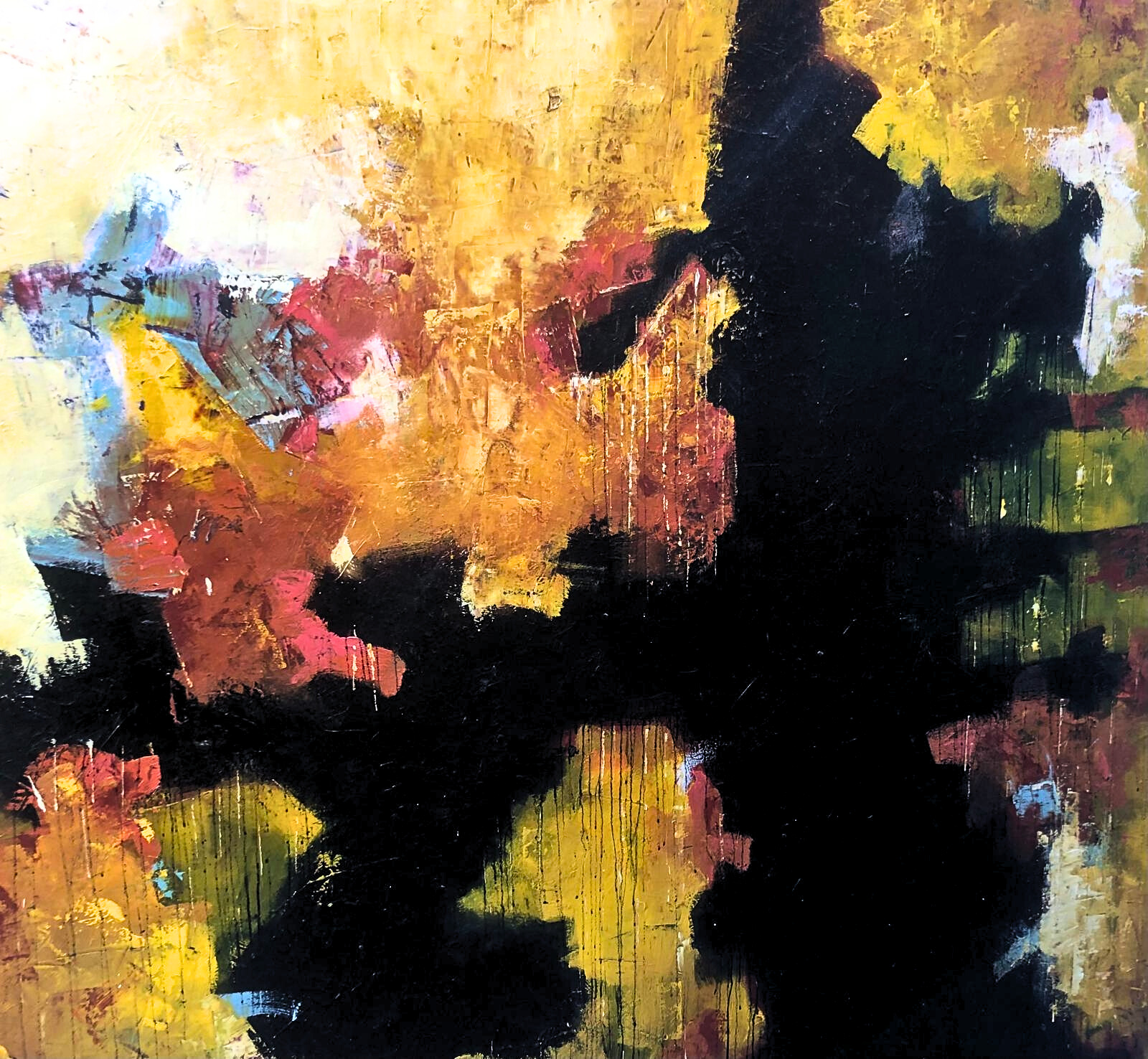
The Battle
Adrian Bol presents a composition that does not unfold—it confronts. The painting feels less constructed than collided into being, as if opposing forces have met and left their imprint on the surface. A dominant vertical form cuts through the composition, intersected by a horizontal mass, creating a structure that reads as both division and convergence. It is not immediately stable. It holds.
Bol’s technique here is less about refinement than endurance. Edges are not resolved; they are contested. Forms dissolve into one another, then reassert themselves, as though repeatedly tested. The vertical axis remains the only constant—a dark, unwavering presence that anchors the composition while everything around it shifts and strains. It does not dominate; it withstands.
The composition holds its energy through imbalance. There is no symmetry, no resting point. The surrounding space presses inward, thick with unresolved motion, as if the painting exists within an ongoing force rather than after it. Light does not illuminate the scene—it breaks through it, fractured and uneven, suggesting emergence under pressure.
There are no explicit figures, yet the language of conflict is unmistakable. The crossing forms evoke collision, resistance, and intersection—moments where direction is interrupted and redefined. The work carries the weight of struggle without depicting it directly. It is not illustrative. It is experiential.
This is not a painting of resolution. It is a painting of endurance within confrontation. Of holding position when forces oppose. Of something remaining upright—not untouched, but unbroken. The battle is not shown. It is embedded in the surface.
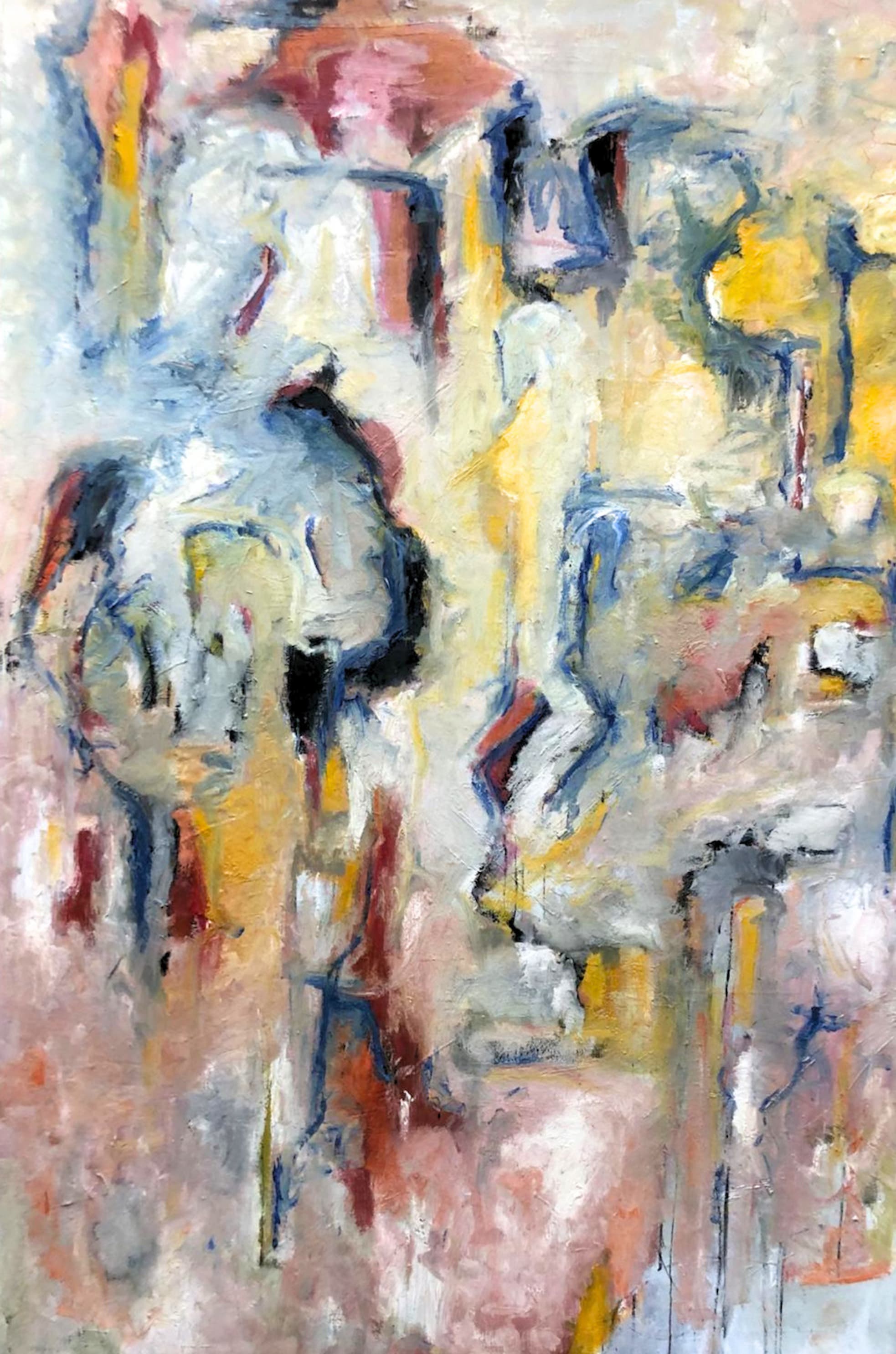
King of Glory
120 × 200 cm - Oil on canvas
120 × 200 cm - Oil on canvas
75 × 55 cm - Oil, charcoal, and chalk on canvas
A powerful work from Adrian Bol’s Through the Fire series, exhibited at the Museo dell’Ara Pacis in Rome in 2026. The painting unfolds through layered gestures and fluid transitions, where fragmented figures emerge and dissolve within a luminous, shifting field. Cool blues and pale whites are disrupted by flashes of red and gold, creating a tension between stillness and movement, presence and absence.
The composition resists fixed form, allowing the viewer to navigate between abstraction and figuration. Faces appear only partially, as if suspended between visibility and erasure, suggesting an inner state rather than a defined identity. The surface remains active and unresolved, carrying the traces of process and transformation.
As part of Through the Fire, the work reflects Bol’s ongoing exploration of spiritual passage and human vulnerability, translating them into a visual language that is both immediate and open-ended.
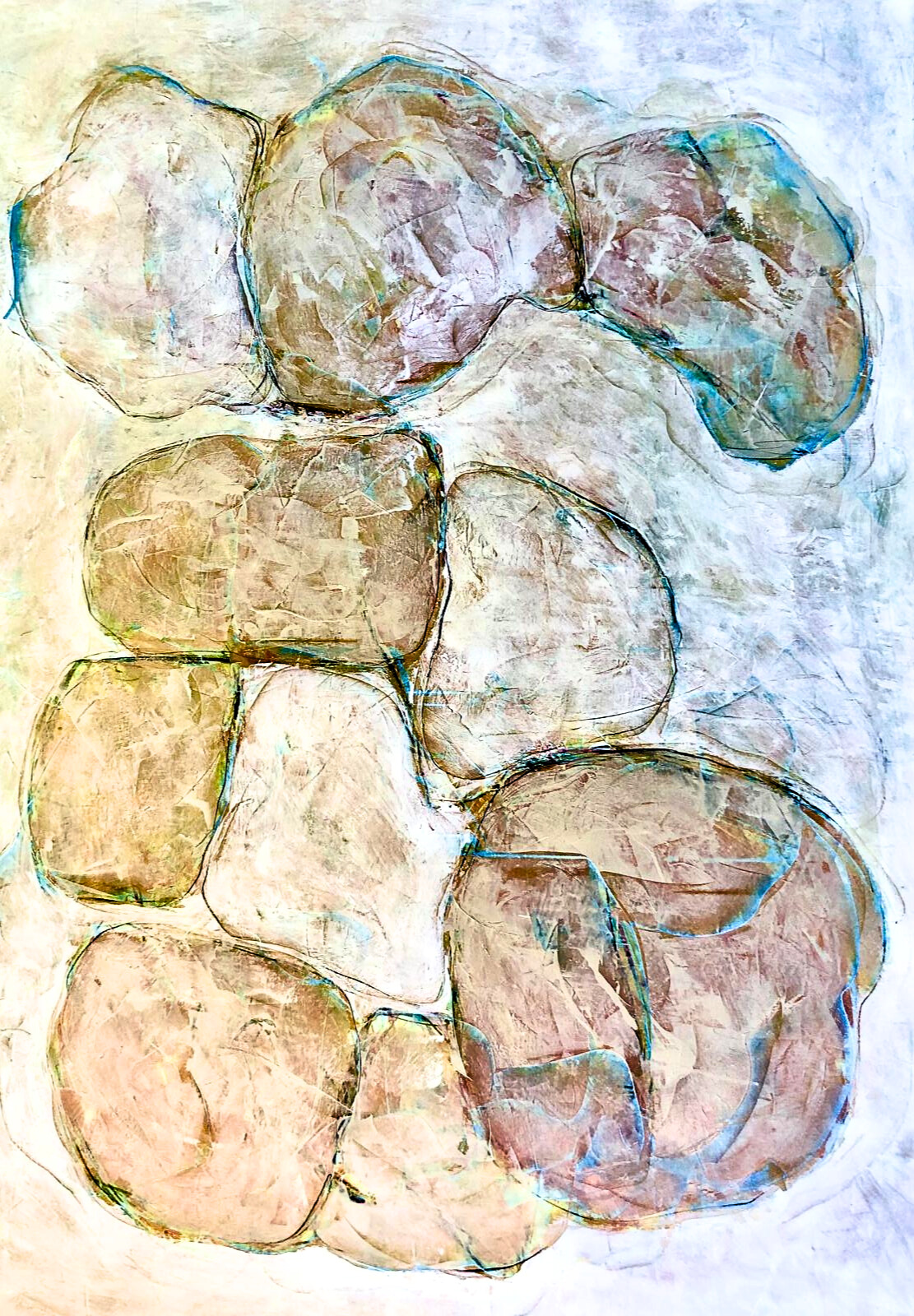
Stones of Light
100 × 150 cm - Oil, charcoal, and chalk on canvas
100 × 150 cm - Oil, charcoal, and chalk on canvas
Adrian Bol presents a composition that feels assembled rather than painted — as if each form has been placed with intention after having been wrested from resistance. The surface is built from layered, translucent shapes that resemble stones or sealed vessels, stacked and leaning into one another, forming a quiet but resolute structure.
The technique is deliberately restrained. Bol works with thin, semi-opaque layers, allowing earlier decisions to remain visible beneath the surface. Scraped passages, softened edges, and overlapping contours create a sense of accumulated effort. Nothing here is polished away. The painting remembers its own making. The repeated outlining of forms — traced and retraced in muted blues and earthy lines — suggests guarding, sealing, or marking, echoing the biblical idea of stones set as testimony.
The composition holds tension through balance. The forms are imperfectly aligned, slightly off-center, resisting symmetry. This instability gives the work its strength. It feels built under constraint, as though each element had to be placed while contending with unseen forces. The negative space around the cluster remains active, pressing in rather than retreating, reinforcing the sense of spiritual opposition that frames the work.
There are no overt symbols, yet the biblical resonance is unmistakable. The stones recall altars raised after crossing, foundations laid after trial, or living stones spoken of in Scripture — shaped not by comfort, but by endurance. Traces of abrasion and faint red undertones read as remnants of struggle, while the prevailing light speaks of passage rather than arrival.
This is not a painting about ascent in triumph. It is about establishment. About holding ground. About having crossed through darkness and now standing as evidence of that crossing. The work does not announce victory. It stands in it.
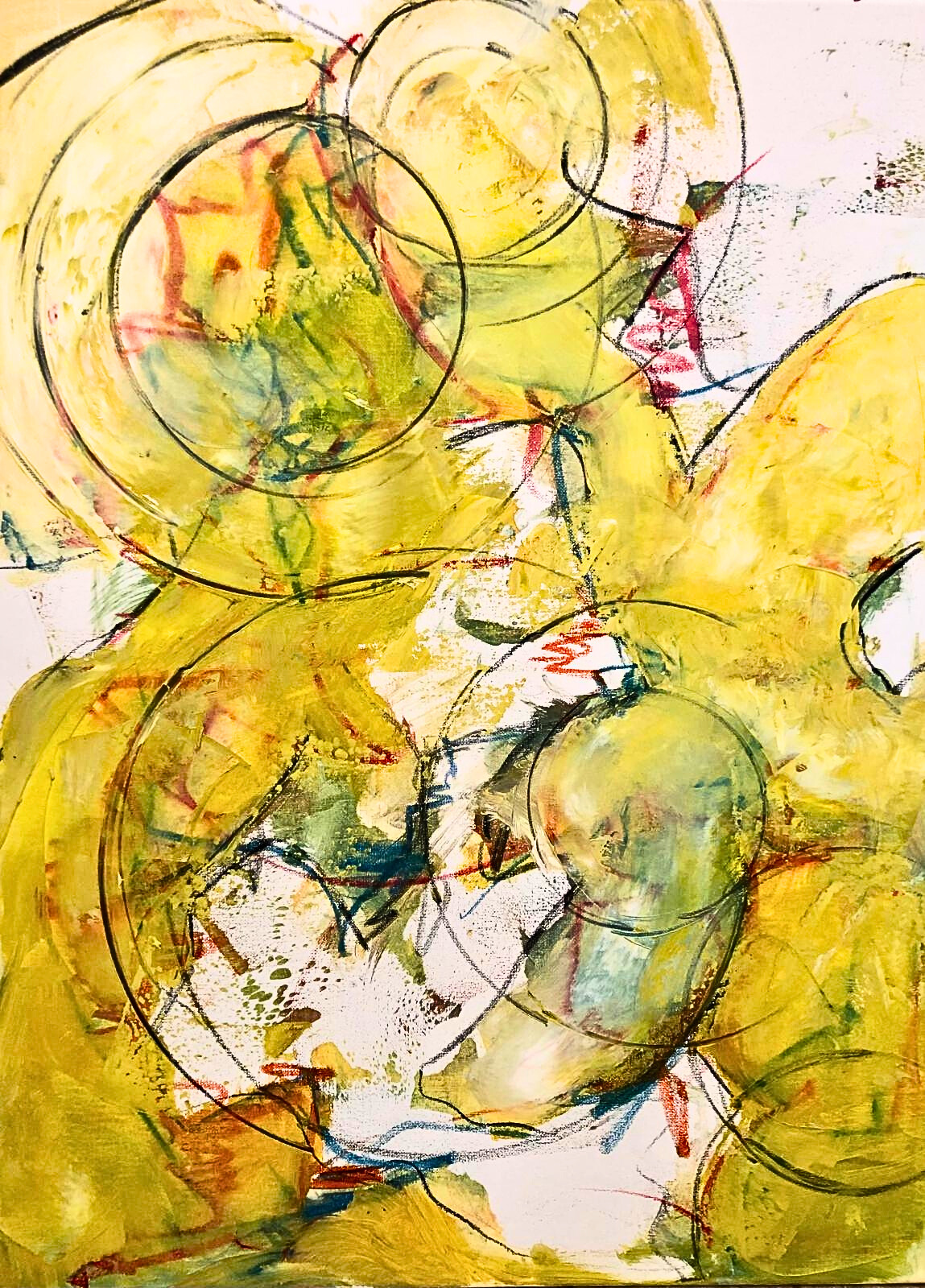
After the Breach
75 × 55 cm - Oil, charcoal, and chalk on canvas
Private Collection
75 × 55 cm - Oil, charcoal, and chalk on canvas
Private Collection
75 × 55 cm - Oil, charcoal, and chalk on canvas
In After the Breach, Adrian Bol presents a surface that has passed through conflict and now bears witness to what lies beyond it. This is not an image formed in safety, but one forged through resistance. The painting carries the marks of spiritual battle — pressure, rupture, and endurance — as if it has pushed through a hostile realm to reflect a higher light.
The composition suggests movement upward and outward, a force pressing against obstruction. Forms emerge and dissolve, not in uncertainty, but in transition. What we see is not the struggle itself, but its residue — the evidence left behind after crossing through darkness. The violence of the marks, the abrasions, and flashes of red read as signs of cost: the labor required to pass through the second heaven, where opposition resists every advance toward truth.
Light enters the work unevenly, fractured yet persistent. It does not flood the surface; it breaks in. This restraint gives the painting its authority. The light is not decorative or symbolic — it is earned. It reflects the Kingdom rather than inventing it, functioning as a mirror rather than a source. The darker passages remain visible, reminding us that victory is not the absence of battle, but the result of it.
Bol’s palette reinforces this passage. Earthy tones and muted flesh colors are interrupted by blues and reds that feel less like color choices and more like testimony — traces of conflict and perseverance. The surface does not conceal effort. It bears witness to it.
There is no triumphalism here. No spectacle. Instead, the painting stands quietly, as something that has endured and crossed. Like a threshold already passed, it does not ask permission or explanation. It simply remains, reflecting the light that comes from beyond the struggle.
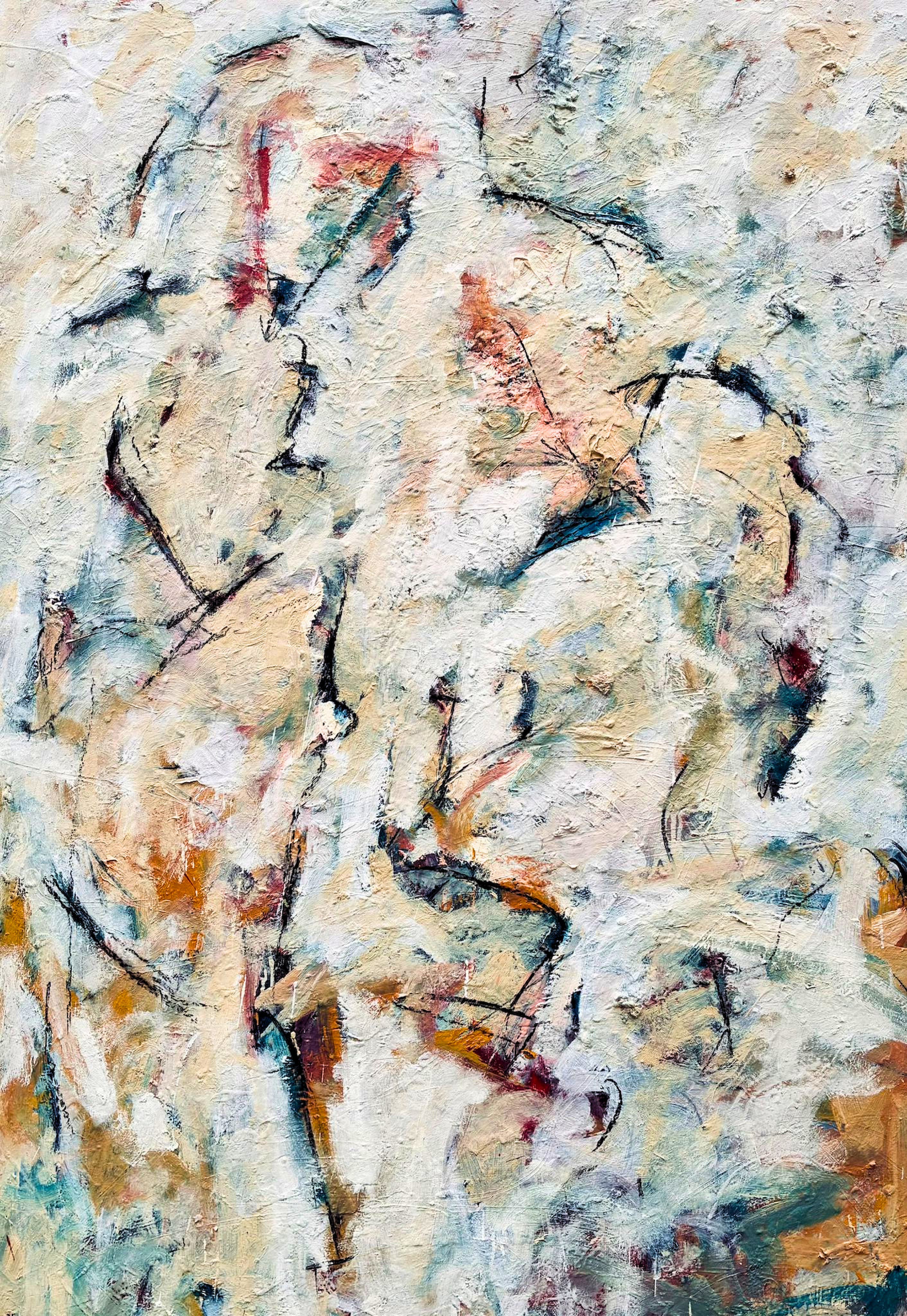
Birds of Freedom
200 × 170 cm - Oil, charcoal, and chalk on canvas
100 × 150 cm - Oil on canvas
A quiet explosion of movement and emotion, this abstract painting captures the fleeting essence of birds in flight—suggested rather than defined. Layers of textured paint create a tactile surface that invites the viewer closer, revealing a delicate balance between chaos and harmony. Soft whites and muted earth tones form a luminous backdrop, while expressive strokes of black, deep blue, and warm reds trace the ghostlike silhouettes of wings and bodies in motion.
The composition feels both spontaneous and intentional, evoking a sense of freedom, transition, and inner release. Each mark appears as a gesture—raw, instinctive, and alive—suggesting the presence of something just beyond reach. The painting breathes with energy, yet remains contemplative, offering space for personal interpretation.
Perfect for a modern interior, this piece brings a sense of lightness and depth, transforming any room into a place of reflection and quiet inspiration.
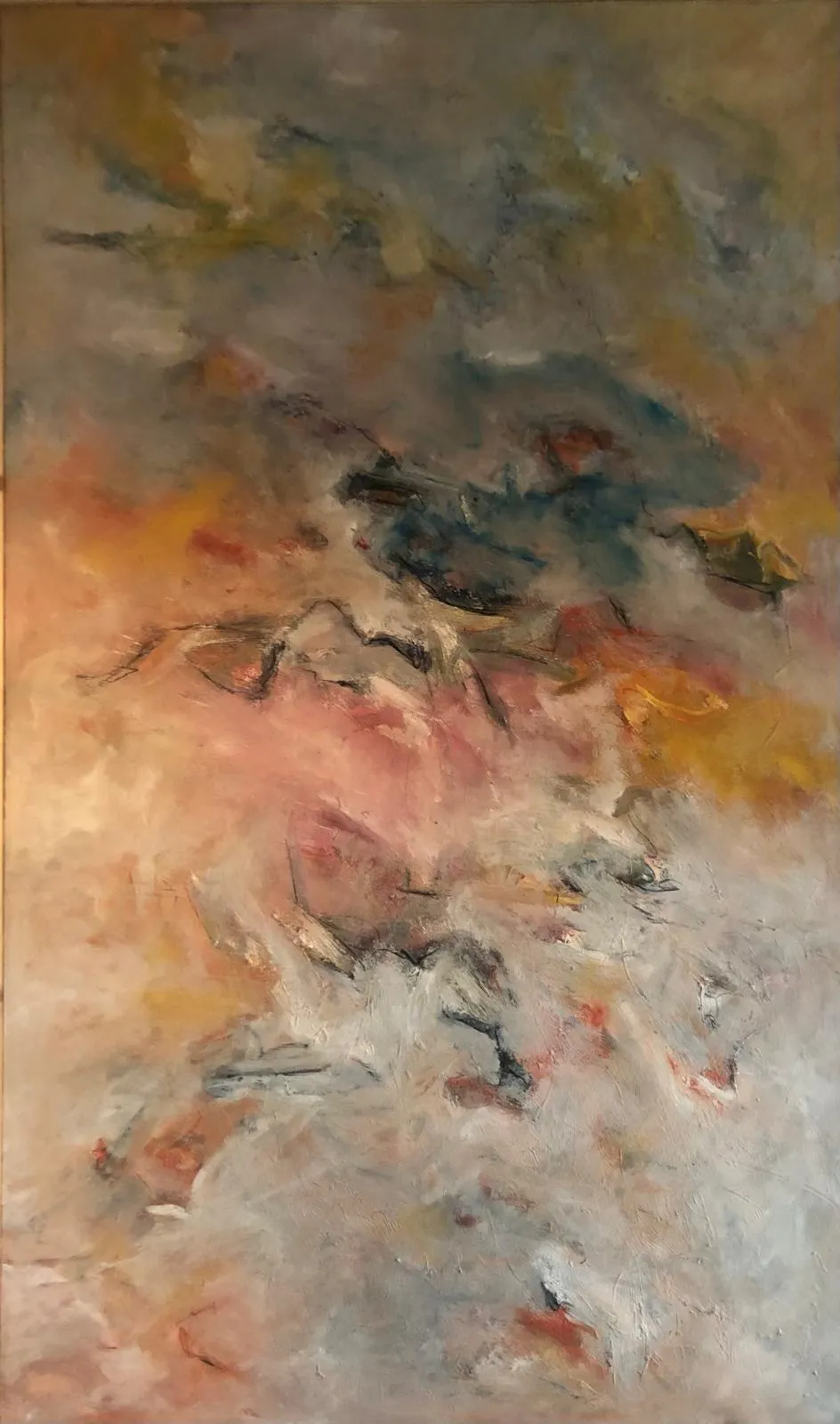
Through the Veil
200 × 145 cm - Oil on canvas
Private Collection
200 × 145 cm - Oil on canvas
Private Collection
In Through the Veil, Adrian Bol captures spiritual warfare not as a fixed confrontation, but as movement—force pressing forward through resistance. The painting unfolds like a battlefield seen through clouds of dust and fire, where forms refuse to settle and light strains against obscuring layers of darkness.
Broad, sweeping gestures dominate the surface, applied in oil with urgency and abrasion. Charcoal lines cut through the composition like traces of impact, scars left by unseen clashes.
The palette moves between ash-like greys, muted blues, and bruised flesh tones, disrupted by eruptions of ochre and flame. These warmer passages do not arrive gently; they push through, as if breaking ranks from below the surface.
The composition reads vertically, suggesting ascent. Darkness hangs above like a weight, while light gathers and advances beneath it. This is not chaos for its own sake, but ordered struggle—a sense that pressure is purposeful, that motion is directed. The painting reflects the biblical image of battle “not against flesh and blood,” but against forces that resist the breaking-in of light.
What emerges is not yet full revelation, but momentum toward it. Victory is implied, not declared. The light has not flooded the field—but it has breached it. The marks of effort, strain, and cost remain visible, bearing witness to the passage through opposition rather than the avoidance of it.
The surface remains raw and unresolved, reinforcing the sense that this is a moment within an ongoing journey. Yet the direction is clear.
This painting does not depict the end of the battle. It depicts the moment when the veil begins to tear.
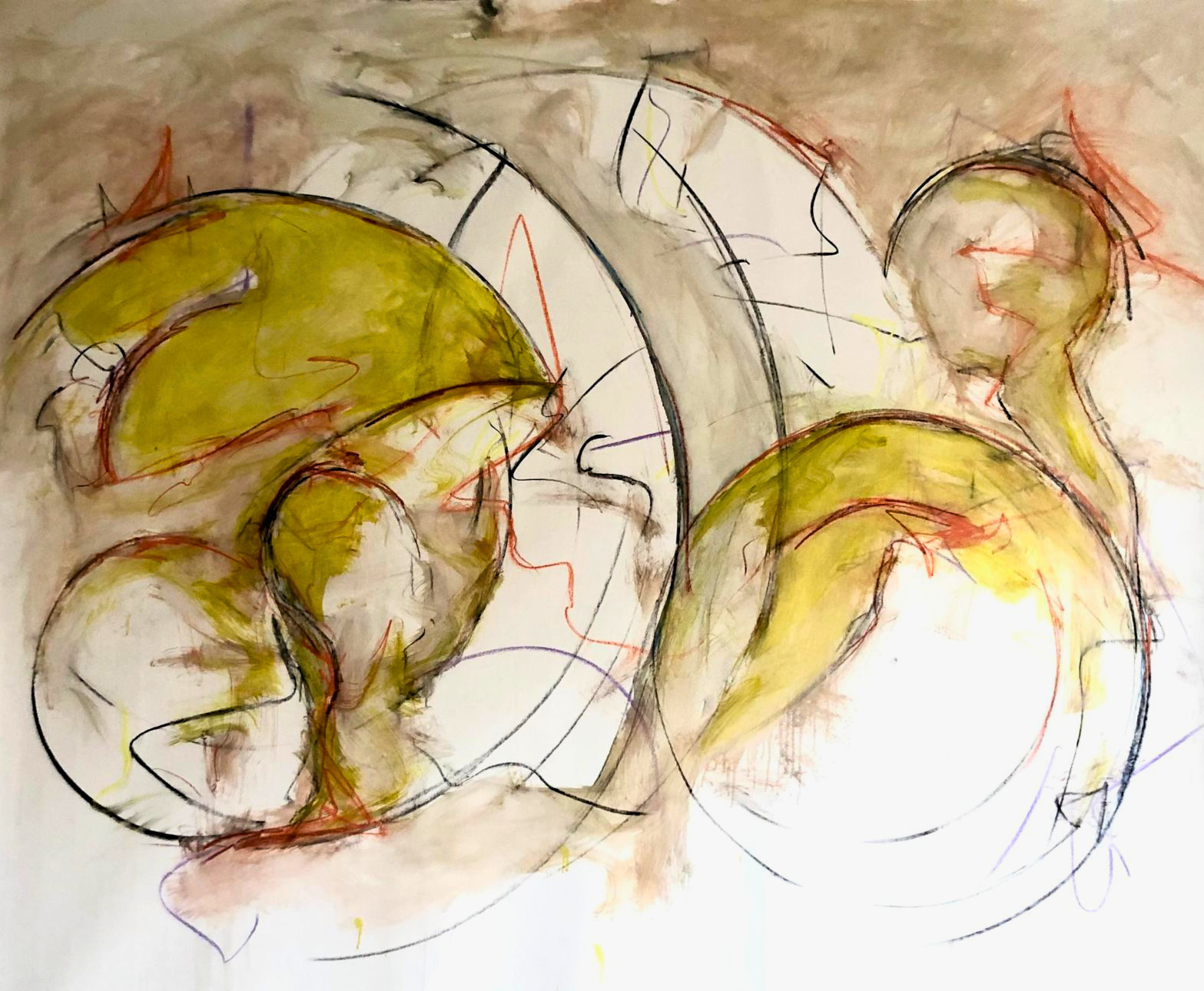
Into the Battle
200 × 170 cm - Oil, charcoal, and chalk on canvas
200 × 170 cm - Oil, charcoal, and chalk on canvas
A dynamic work from Adrian Bol’s Through the Fire series, exhibited at the Museo dell’Ara Pacis in Rome in 2026. The composition unfolds through sweeping, circular forms that suggest both protection and confrontation, as fragmented figures emerge within a charged, luminous field. Warm ochres and radiant yellows dominate, interrupted by sharp linear markings that cut across the surface, creating a tension between movement and restraint.
The figures appear enclosed yet exposed, caught within arcs that evoke shields, halos, or forces in motion. Their identities remain unresolved, shifting between presence and abstraction. The raw, gestural lines retain the immediacy of the artist’s hand, while the layered pigments create depth and vibration across the surface.
As part of Through the Fire, the work reflects Bol’s exploration of inner conflict and transformation, where the image becomes a space of passage rather than representation.
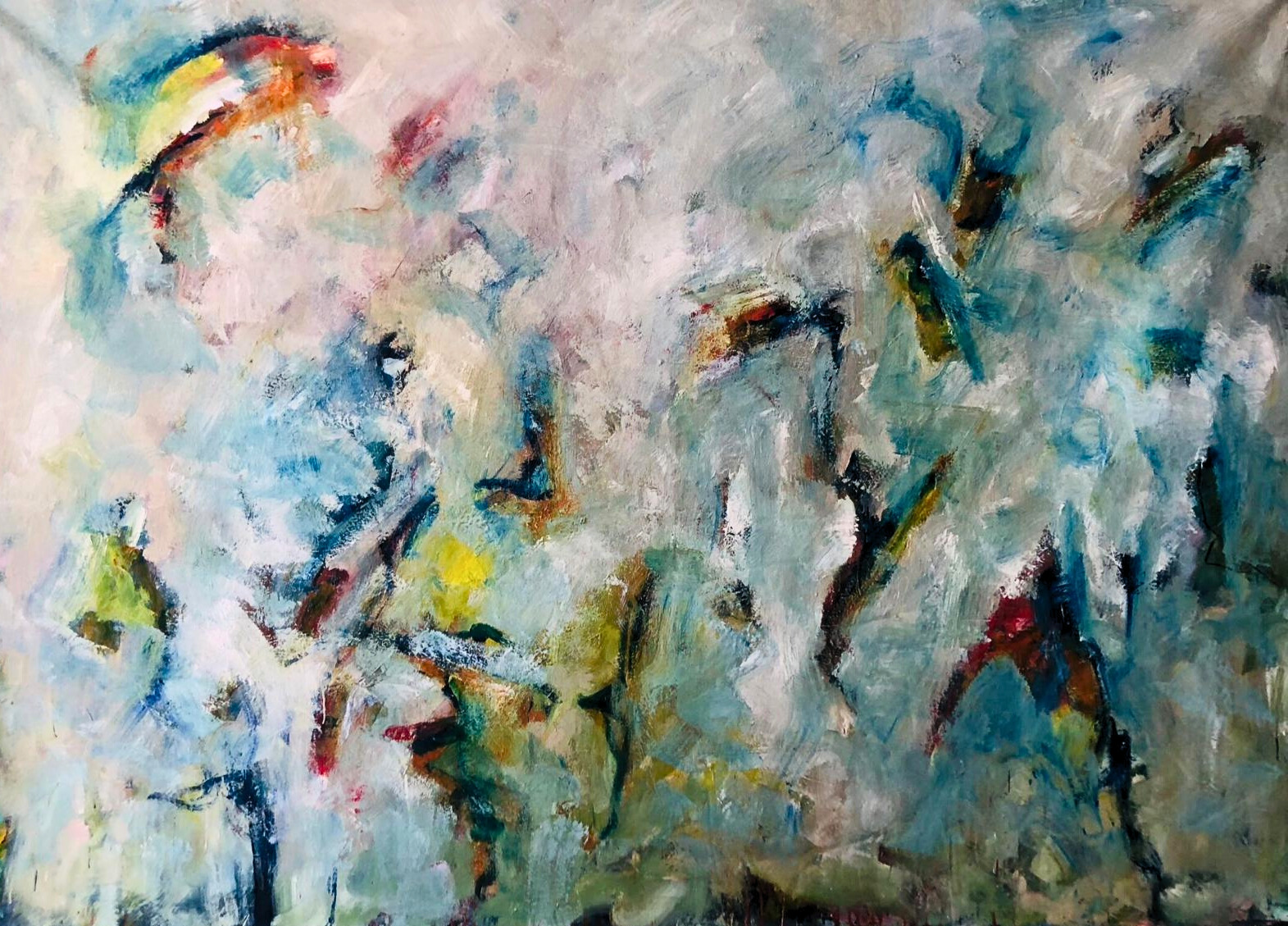
Day of the Storm
200 × 170 cm - Oil on canvas
Private Collection
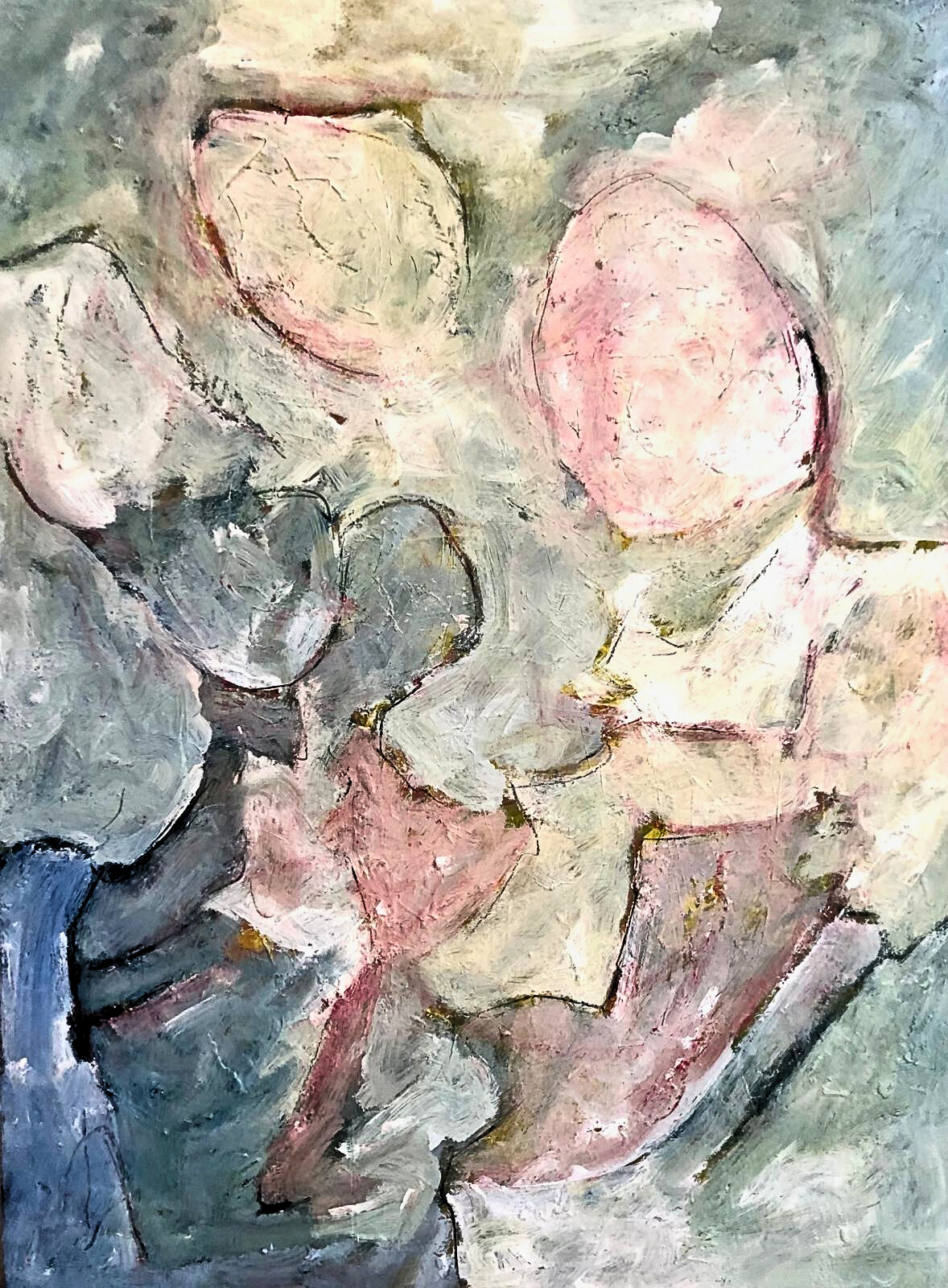
Beyond the Veil
75 × 55 cm - Oil on canvas
In Beyond the Veil, Adrian Bol portrays a family not merely enduring spiritual conflict, but emerging through it — bound together, refined, and victorious. The clustered forms lean inward and upward, suggesting solidarity rather than fracture. These figures do not stand alone; they advance as one body, shaped by hardship yet strengthened by it.
Bol’s layered technique mirrors the process of passage. Broad, assertive brushstrokes establish the forms, while scratched lines and repeated contours testify to resistance met and overcome. The figures overlap deliberately, reinforcing a sense of shared ground — a household that has stood firm while moving through the unseen pressures that surround it.
The color palette carries both memory and promise. Soft flesh tones and muted pinks speak to humanity and vulnerability, while cooler greens and blues recede like the remnants of a darkened realm already passed through. Light gathers more confidently here than in earlier works, pressing outward from within the forms themselves. This is not light imposed from above, but light revealed after the crossing.
Compositionally, no single figure dominates. Authority here is collective. The family advances together, reflecting the biblical image of a house built on firm ground — tested by storm, yet unshaken. The marks of struggle remain visible, but they no longer define the scene. They testify.
This painting does not dwell in conflict. It stands on the far side of it. What is depicted is not survival, but victory — a family aligned, 75 × 55 cm - Oil, charcoal, and chalk on canvas covered, and carrying forward the light of the Kingdom into open space.
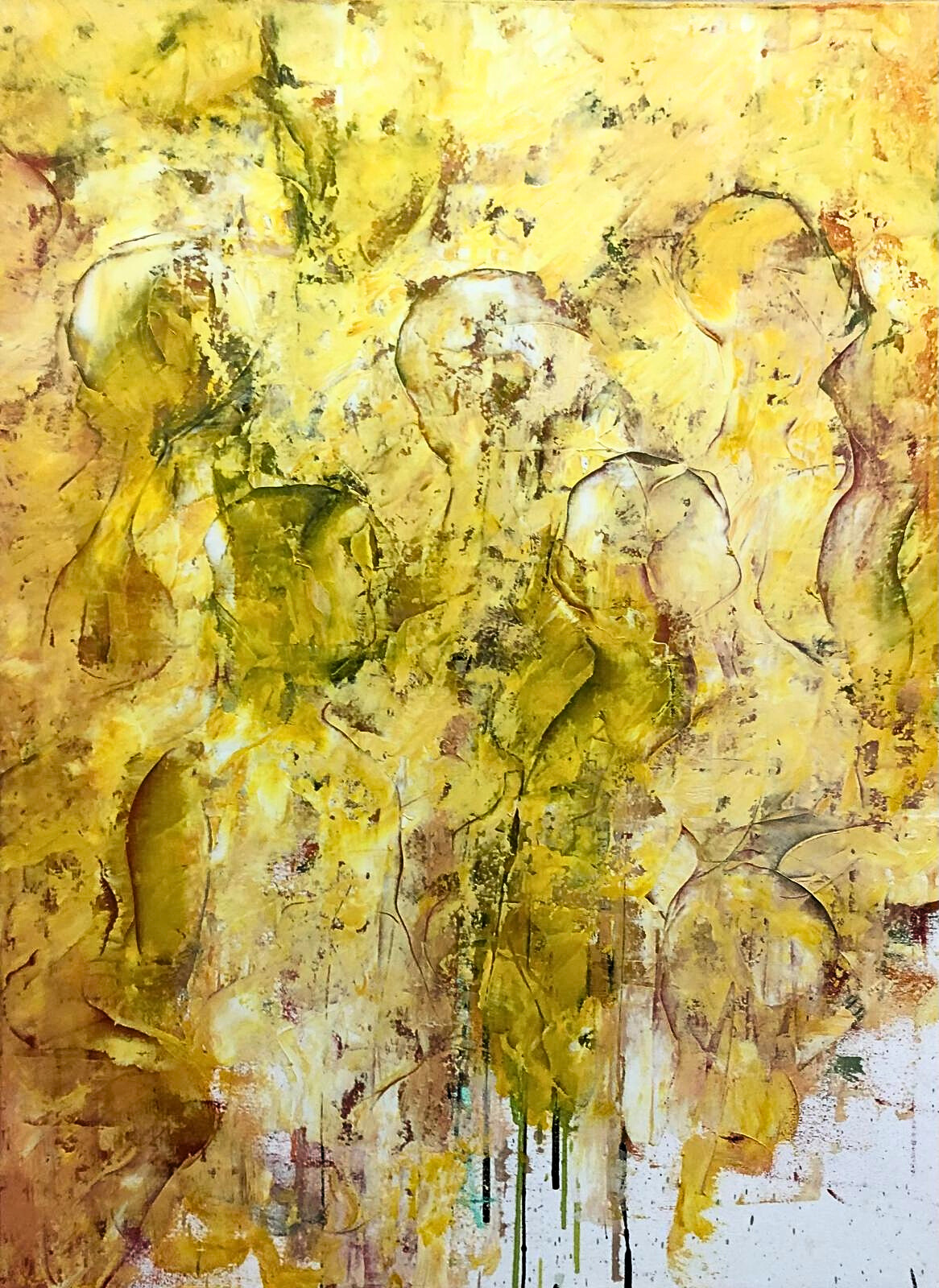
Before the Throne
75 × 55 cm - Oil, charcoal, and chalk on canvas
Private Collection
75 × 55 cm - Oil, charcoal, and chalk on canvas
Private Collection
In Before the Throne, Adrian Bol portrays a moment not of combat, but of reverent pause—figures gathered in the aftermath of spiritual battle, turned upward toward a sound that does not come from this world.
The composition is saturated in golds and warm yellows, evoking the radiance of the Third Heaven, where light is not reflected but originates. These tones are layered thickly with oil paint, scraped and reworked until the surface feels both luminous and worn, as if the light itself has passed through resistance to arrive here. Drips run downward like traces of oil and incense, grounding the heavenly moment in the weight of human presence.
The figures are suggested rather than defined—outlined softly, almost dissolving into the glow around them. They stand close, facing inward and upward, not as individuals seeking attention, but as a gathered people in shared adoration. Their posture is still, receptive. This is not movement toward victory, but rest within it.
Subtle greens and earth tones break through the gold, reminding us that these are not angels but people—marked by the struggle of the second heaven, yet now standing under a different authority. The absence of sharp lines creates a sense of sound rather than sight: the painting feels as though it is listening. One senses heavenly music filling the space, a voice that cannot be seen but is unmistakably present.
Biblically, the work echoes scenes from Revelation—crowds gathered before the throne, clothed in light, having come through trial and testimony. There is no spectacle here, only awe. No conquest, only surrender. The battle has passed; worship remains.
Before the Throne reflects a breakthrough not just through darkness, but into communion. The painting does not announce the voice—it allows it to be heard. The figures do not sing loudly; they receive. And in that listening, heaven and earth briefly touch.